
Should You Try Fibermaxxing? A Dietitian’s Take on TikTok’s High-Fiber Trend
August 25, 2025
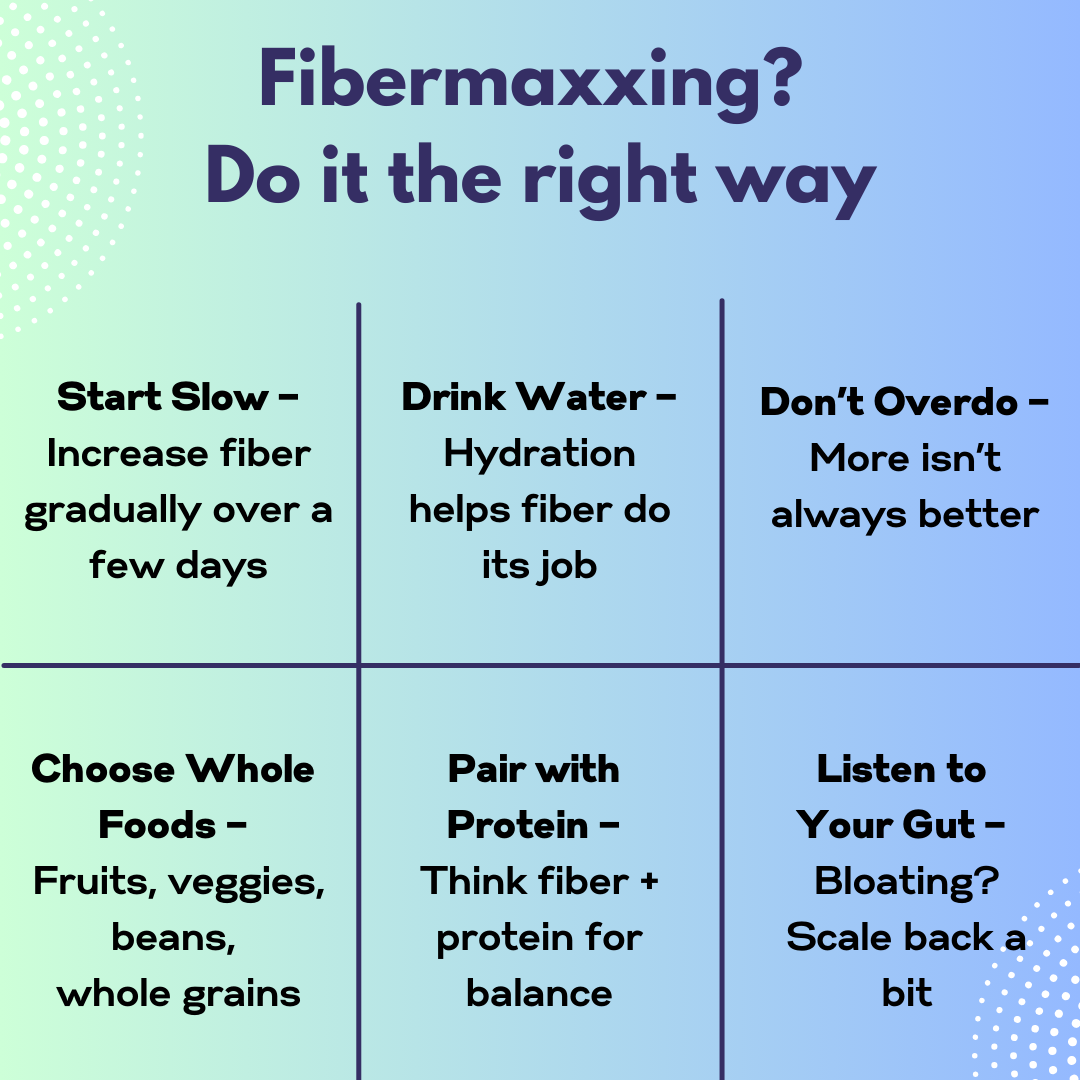
TikTok is at it again and this time with a trend called fibermaxxing, where users ramp up their fiber intake in an effort to feel full, support digestion, or improve overall health. Some are even pushing well past the recommended limits, using supplements and ultra-high-fiber meals to “hack” their bodies.
As a registered dietitian, I love the attention on fiber—most Americans fall short… but trends like this can take a good thing and go too far. Before you overhaul your diet in the name of fiber, here’s what you should know.
What Is Fibermaxxing?
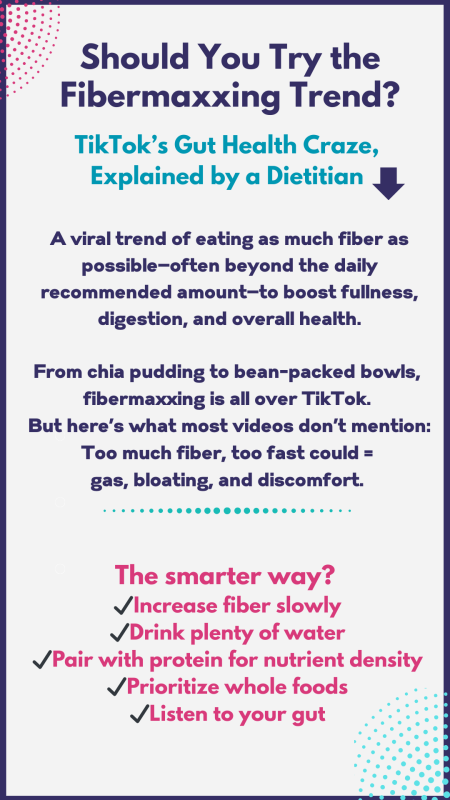
Fibermaxxing is the practice of intentionally eating a very high-fiber diet—often exceeding daily recommendations—in the hope of boosting satiety, improving gut health, or even aiding weight loss. It’s trending on TikTok and other social media platforms, where creators are showing off high-fiber meals and snacks as part of a wellness routine.
While the enthusiasm for fiber is well-placed, more isn’t always better. Increasing fiber too quickly—or eating large amounts without a plan—can lead to digestive issues like bloating, gas, and cramping.
Fiber’s Health Benefits (When Done Right)
Fiber is a superstar nutrient with a long list of science-backed benefits. It supports:
- Digestive health by keeping things moving
- Blood sugar control by slowing digestion
- Heart health by helping reduce cholesterol
- Satiety by keeping you full longer, which can support weight management
Most people benefit from eating more fiber, but it should come from whole, minimally processed foods whenever possible—not just powders or added fiber in packaged snacks.
The Best Fiber-Rich Foods to Add to Your Diet
If you’re looking to increase your fiber intake, start with these naturally nutrient-dense choices:
- Fruits: Raspberries, pears (with skin), apples, oranges
- Vegetables: Carrots, broccoli, sweet potatoes, leafy greens
- Whole grains: Oats, barley, brown rice, whole wheat bread
- Legumes: Lentils, black beans, chickpeas, edamame
- Nuts and seeds: Chia seeds, flaxseeds, almonds, walnuts
- Avocados: Yes, they’re fiber-packed too!
You don’t need to go all-in at once. A handful of raspberries at breakfast, raw veggie sticks with hummus in the afternoon, or a half-cup of beans at dinner are simple, sustainable ways to get started.
How Much Fiber Do You Really Need?
The recommended daily fiber intake is:
- 25 grams for women
- 38 grams for men
For children, the amount depends on age. A general rule is “age + 5 grams”—so a 7-year-old would need about 12 grams per day. Some guidelines go higher based on energy needs, but fiber shouldn’t crowd out other critical nutrients kids need for growth—like protein, iron, and healthy fats.
How to Increase Fiber Without Upsetting Your Gut
If you’re currently eating a low-fiber diet, don’t go from 10 grams to 40 grams overnight. Your digestive system needs time to adjust. Here’s how to do it the smart way:
- Add fiber-rich foods one at a time—e.g., fruit with breakfast, beans with lunch, veggies at dinner.
- Space out the changes over several days or weeks.
- Stay hydrated—fiber needs fluid to move efficiently through your system.
- Listen to your body—if you’re feeling overly full, gassy, or bloated, scale back and increase more gradually
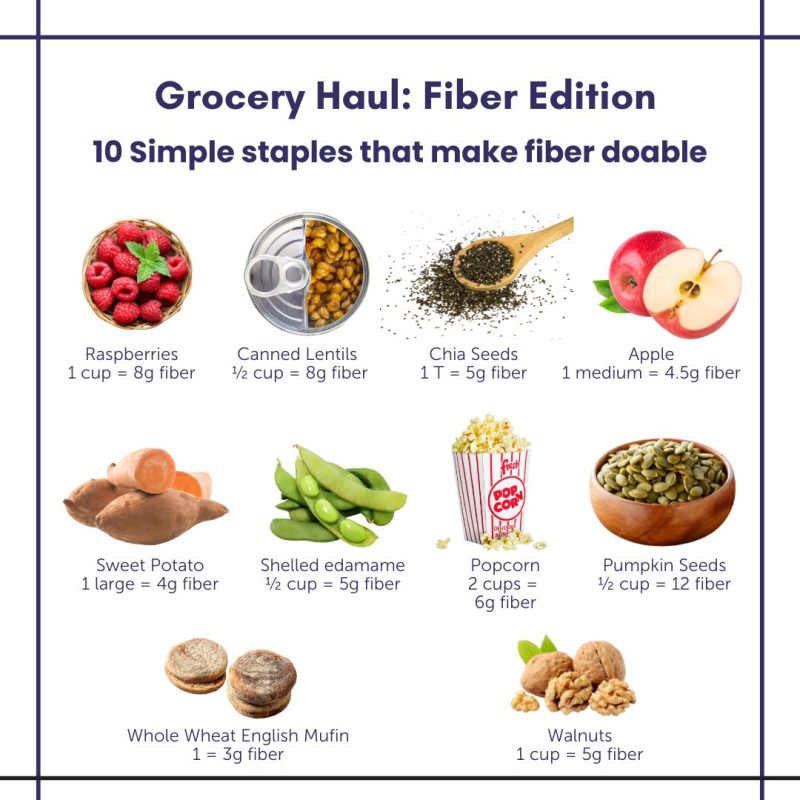
Fiber-Filled Shopping List
- ¼ cup pumpkin seeds: 6 grams
- 1 tablespoon chia seeds: 5 grams’
- 1 cup raspberries: 8 grams
- 1 cup blueberries: 4 grams
- 1 medium apple: 4.5 grams
- ½ cup cooked lentils: 8 grams
- 1 cup edamame (aka, immature green soybeans): 8 grams
- ½ cup canned cannellini beans: 8 grams
- 1 cup green peas: 7 grams
- 1 cup walnuts: 5 grams
- 1/3 medium avocado: 4 grams
- 1 cup collard greens: 4 grams
- 1 cup cauliflower: 2.2 grams
- 1 cup Raisin Bran: 7 grams
When adding more fiber to your diet, take it slow so your body and your microbiome have a chance to adjust.
The Importance of Balance
Too much of a good thing can backfire. Fiber is important, but if it dominates your plate, it may displace other nutrients like protein, healthy fats, or iron. And if you’re chasing protein all day, you might be missing fiber entirely.
The goal isn’t to max out one nutrient—it’s to build meals that are balanced, satisfying, and nutrient-rich. Pair fiber with protein for the best results: think Greek yogurt with berries and chia seeds and nuts, lentil soup with whole grain bread, or salmon with roasted veggies.
When Fibermaxxing May Be Harmful
This trend isn’t right for everyone. People with certain medical conditions may need to limit or tailor their fiber intake:
- Inflammatory bowel diseases (IBD) like Crohn’s or ulcerative colitis
- Gastroparesis or slowed stomach emptying
- Post-surgical recovery, especially after GI procedures
It’s also not suitable for young children, who require balanced, energy-dense meals for healthy growth. Loading up on fiber too early could reduce appetite or interfere with nutrient absorption.
If you’re unsure what’s best for your body, consult a registered dietitian who can help you develop a plan that works for your individual needs.
Final Thoughts: Fibermaxxing or Fiber Smart?
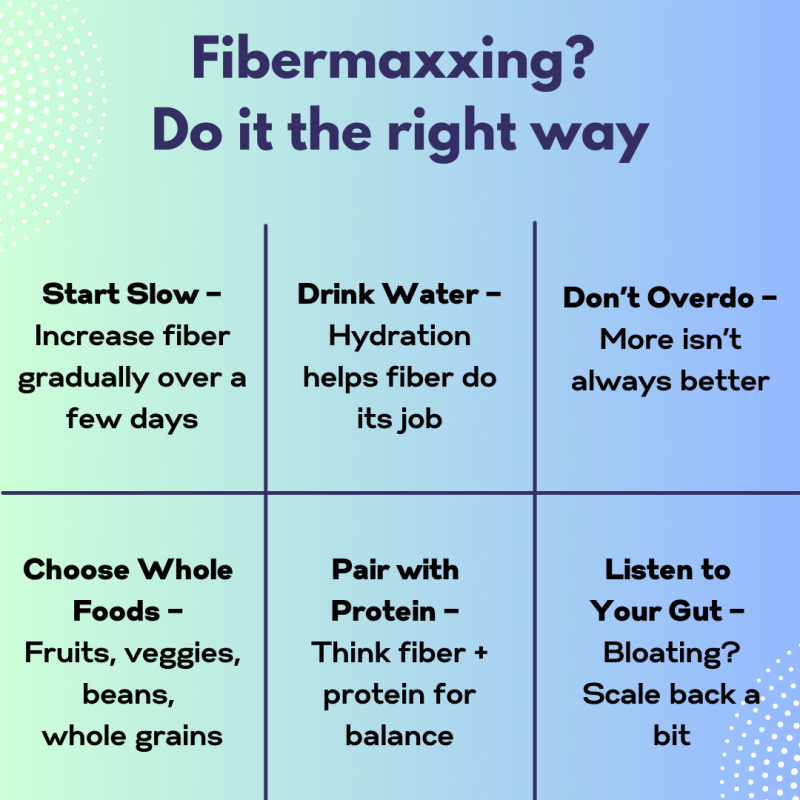
The fibermaxxing trend might be new, but the advice isn’t: eat more plants, build balanced meals, and go slow. Fiber is a powerhouse nutrient, but it works best as part of a diverse, whole-food diet—not in isolation.
Before you try to max out your fiber intake, ask yourself: Is this sustainable? Is this balanced? And is my gut actually happy with it?
Because when it comes to nutrition, trendy doesn’t always mean better, but smart, gradual changes definitely do.
Really loved this article. I’ve been learning to add more fiber the right way and totally agree that balance matters. I also use SheMed’s blogs sometimes for simple diet tips and it’s been super helpful on my health journey.