
Osteopenia: How Nutrition, Exercise, and Lifestyle Can Protect Your Bones
September 29, 2025
I have osteopenia. Have you heard of it? Osteopenia is far more common than most people realize — and the tricky part is, most don’t even know they have it.
With osteopenia, bones become thinner, weaker, and less dense. Think of it as the midpoint between having healthy, strong bones and osteoporosis, the “brittle bone disease” that makes bones weak and increases the risk for fracture.
Osteopenia doesn’t cause pain. It’s a silent condition, and the best way to detect it is with a bone density test called a DEXA scan, usually of the hip or spine.
What might surprise you is just how common this condition is: about half of all Americans over age 50 (oooh, that’s me) have osteopenia. In this post, I’ll share the biggest risk factors for osteopenia and how to prevent and manage it, and I’ll serve up links to delicious recipes that can help to keep your bones strong now and into the future.
What Is Osteopenia?
Doctors define osteopenia using a DEXA scan, short for Dual-Energy X-ray Absorptiometry. It’s the standard test doctors use to measure bone density. It’s quick, painless, and uses very low levels of radiation. The World Health Organization sets the range at a T-score between –1.0 and –2.5, compared with the bone mass of a healthy young adult.
-
Healthy bone density = T-score –1.0 or higher
-
Osteopenia = T-score between –1.0 and –2.5
-
Osteoporosis = T-score –2.5 or lower
Who is at Risk for Osteopenia?
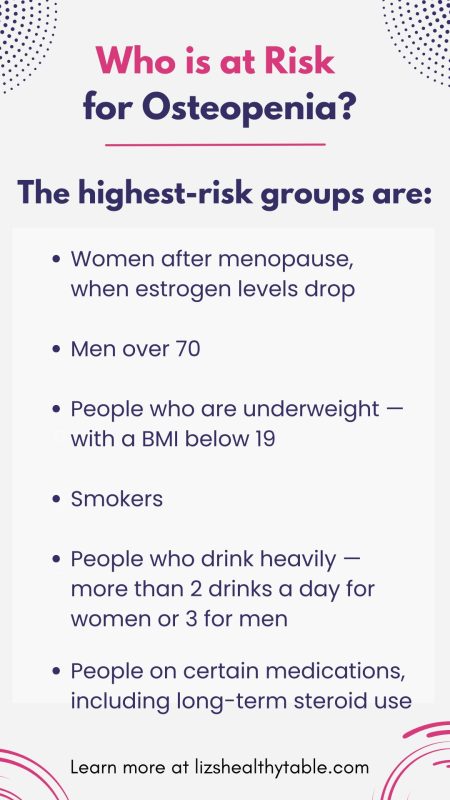
The highest-risk groups for osteopenia are:
- Women after menopause, when estrogen levels drop.
- Men over 70.
- People who are underweight — with a BMI below 19
- Smokers.
- People who drink heavily — more than 2 drinks a day for women or 3 for men.
- And people on certain medications, like long-term steroids.
About half of all people over the age of 50 have osteopenia, but it can also impact younger adults. In fact, a few years ago, I posted a TikTok series on osteopenia, and I was somewhat surprised by the number of comments from young viewers sharing that they’d been diagnosed with osteopenia. I was “somewhat” surprised, because factors like an irregular menstrual cycle (amenorrhea), under-nutrition, or very heavy exercise training can put a young person at risk.
How to Strengthen Bones
Our bones reach their peak bone mass in our late 20s. After that, bone density gradually declines, which is why building strong bones during your teens, 20s, and early adulthood is so important.
Osteopenia itself isn’t usually treated with medication unless fracture risk is high. The main goal is to maintain the bone you have and slow or prevent further loss through:
-
-
Adequate nutrition (calcium, vitamin D, protein)
-
Weight-bearing and resistance exercise
-
Healthy lifestyle habits (no smoking, moderate alcohol, a healthy body weight)
-
Think of it this way: The same lifestyle habits that build strong bones early in life can also help keep bones strong and slow bone loss later in life.
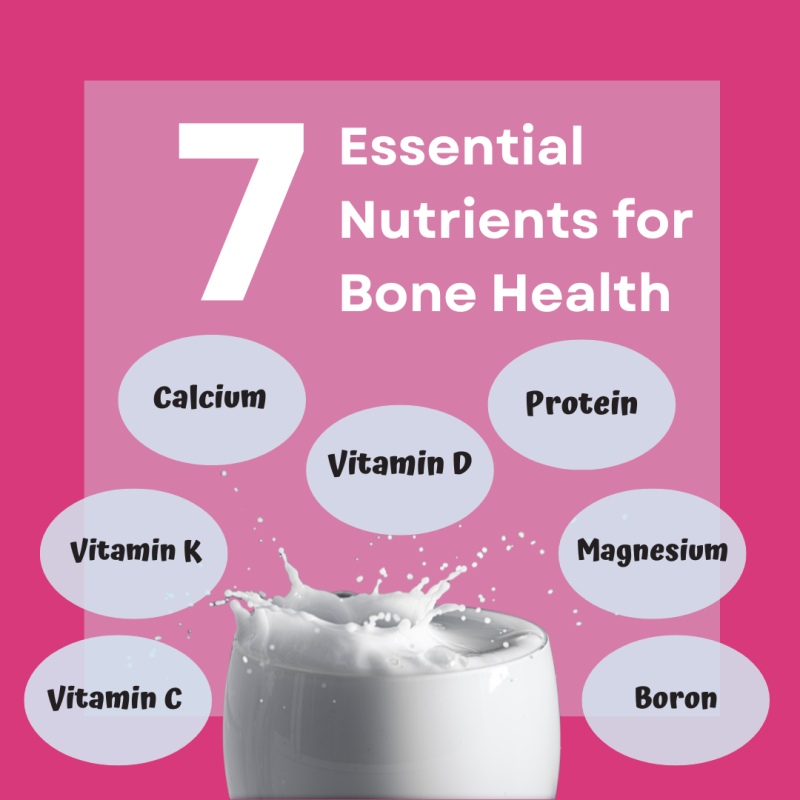
Here are the most important nutrients for bone health, how much you need, and where to find them:
What to do About Diet
Here’s a primer on the nutrients you need to help maintain strong bones:
Calcium (the building block)
-
How much: 1,000 mg/day if you’re under 50; 1,200 mg/day for women 50+ and men 70+
-
Foods: Milk, yogurt, cheese, fortified plant milks, tofu with calcium sulfate, sardines with bones, leafy greens.
Vitamin D (the calcium helper)
-
How much: 600 IU/day up to age 70; 800 IU/day after 71. (Your doctor may recommend more.) NIH ODS
-
Foods: Fatty fish, fortified milk or plant milks, fortified breakfast cereals, egg yolks, sunlight.
Protein (the bone framework)
-
How much: At least 0.8 g/kg of body weight daily; experts recommend 1.0–1.2 g/kg for older adults (Bauer et al., PROT-AGE Study Group).
-
Foods: Lean meats, poultry, fish, Greek yogurt, cottage cheese, eggs, beans, lentils, tofu, tempeh, nuts, seeds.
Vitamin K (the bone binder)
-
How much: 90 mcg/day for women; 120 mcg/day for men (NIH ODS).
-
Foods: Kale, spinach, collards, broccoli, Brussels sprouts, certain cheeses, natto, chicken.
Magnesium (the bone regulator)
-
How much: 320 mg/day for women; 420 mg/day for men (NIH ODS).
-
Foods: Nuts, seeds, beans, whole grains, leafy greens.
Vitamin C (the collagen supporter)
- How much: 75 mg/day for women; 90 mg/day for men; smokers need +35 mg/day (NIH ODS).
-
Foods: Citrus, strawberries, kiwi, peppers, broccoli.
Boron (the trace mineral)
- How much: No official RDA, but the WHO suggests 1–13 mg/day as a safe range; most people get 1–3 mg/day (NIH ODS)
-
Foods: Apples, pears, prunes, raisins, avocados, nuts, legumes.
Want to put these nutrients on your plate? Browse my bone-healthy recipe collection below.
The Best Exercises for Osteopenia
Food builds the foundation, but exercise signals bones to stay strong. The best bone-strengthening workouts include:
-
Weight-bearing exercise: walking, hiking, dancing, jogging.
-
Resistance training: lifting weights, using resistance bands, or bodyweight moves like squats and push-ups.
-
Balance training: yoga, tai chi, or Pilates — to improve stability and reduce fall risk.
Aim for a mix of all three each week. Even small, consistent efforts make a difference.
Lifestyle Habits That Protect Bones
-
Don’t smoke. Smoking accelerates bone loss.
-
Limit alcohol. More than 2 drinks/day for women or 3/day for men weakens bone (Harvard Health).
-
Stay at a healthy weight. Being underweight (BMI <19) increases fracture risk; rapid weight loss can also harm bone.
Do You Ever Need Medication?
For many people with osteopenia, lifestyle changes are the first and best step. But if your DEXA scan shows a high fracture risk, your doctor may recommend medication, such as:
-
Bisphosphonates (alendronate, risedronate, zoledronic acid) — slow bone breakdown.
-
Denosumab — reduces bone resorption.
-
SERMs — mimic estrogen’s protective effect on bone.
These decisions are highly individual and based on your scan results, risk factors, and health history (Bone Health & Osteoporosis Foundation).
The Bottom Line
Osteopenia is common — and often invisible. But with the right mix of nutrient-rich foods, targeted exercise, and smart lifestyle habits, you can protect your bones at any age.
Bone-Healthy Recipes
Cottage Cheese, Orange, and Pomegranate Protein Bowl