
Stock Up On Pulses, and a Recipe for Spring Lentil and Veggie Salad
May 9, 2024
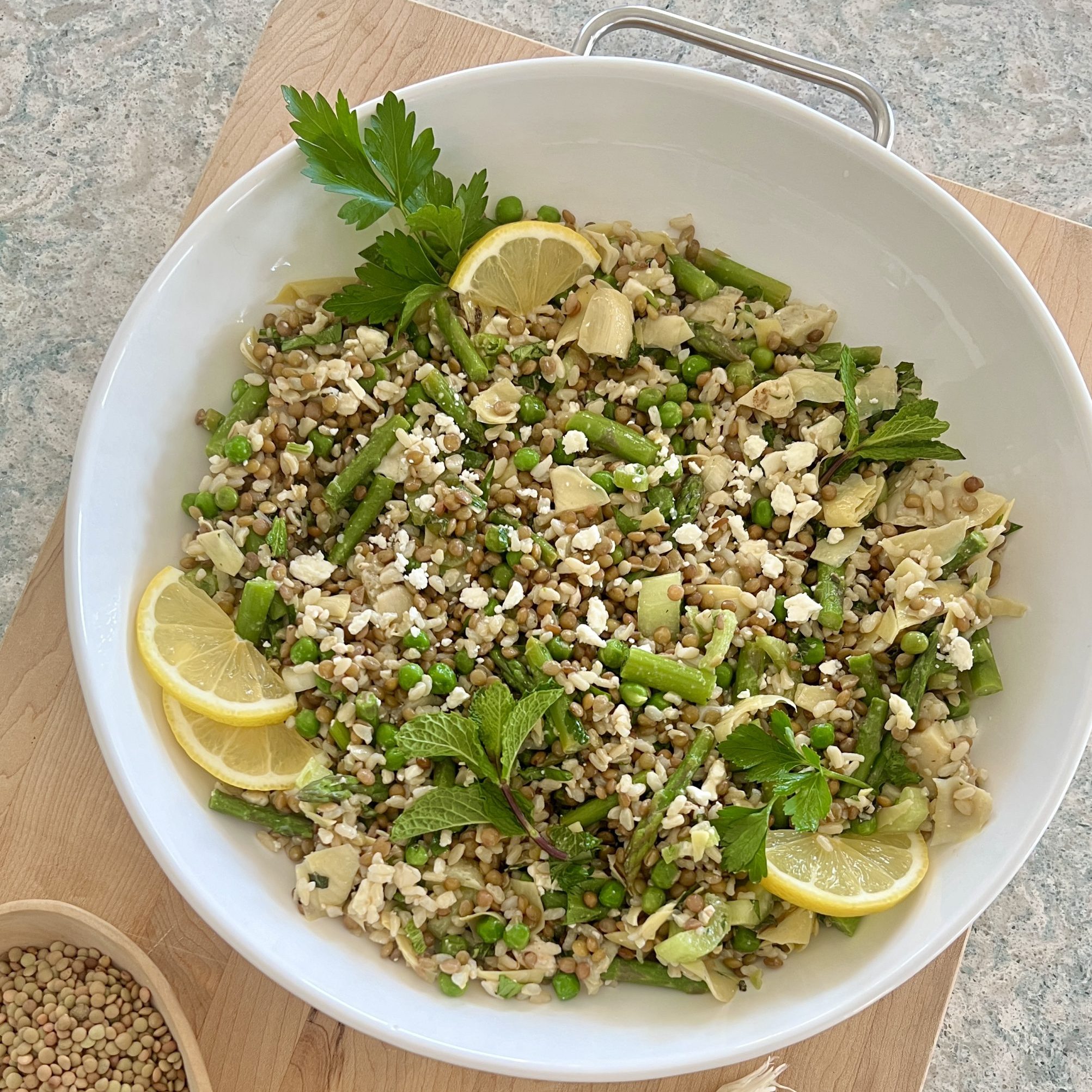
As the weather gets warmer, the days longer, and the flowers bloom here in New England, I get the bug to spring clean my pantry. I wasn’t born with the “organizing” gene, so my pantry in often in disarray by the time I muster the motivation to tackle the task. However, investing just a few hours in cleaning, organizing, and restocking my pantry is a worthy endeavor that yields immensely satisfying results.
Among the items that always receive top priority in my pantry are nutrient-dense pulses.
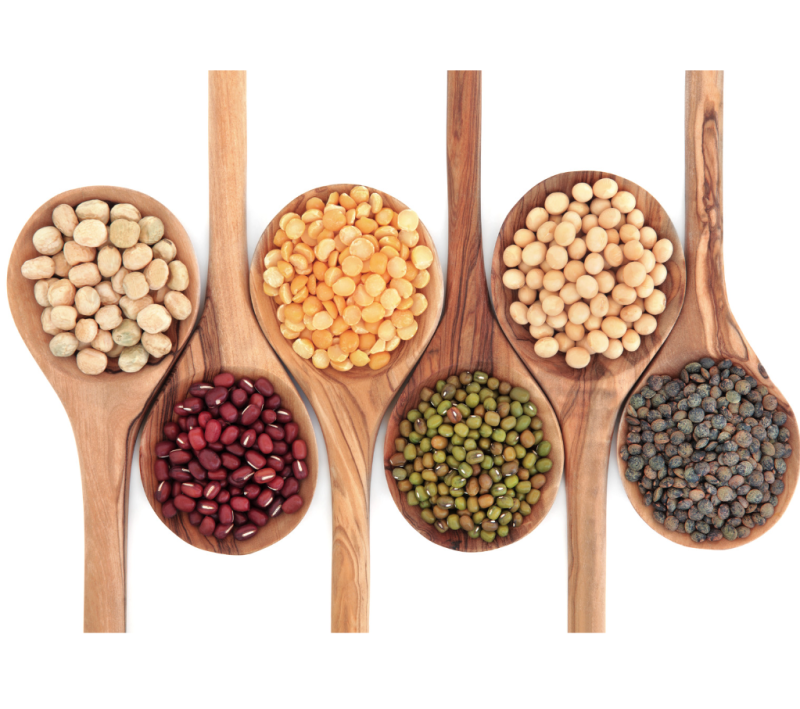
Pulses are the dried edible seeds of legumes, and they include dry peas, beans, lentils, and chickpeas. The word “pulse” comes from the Latin word puls, which means thick soup. Besides their impressive nutrient profile, pulses are affordable, versatile, shelf stable, and they’re grown sustainably.
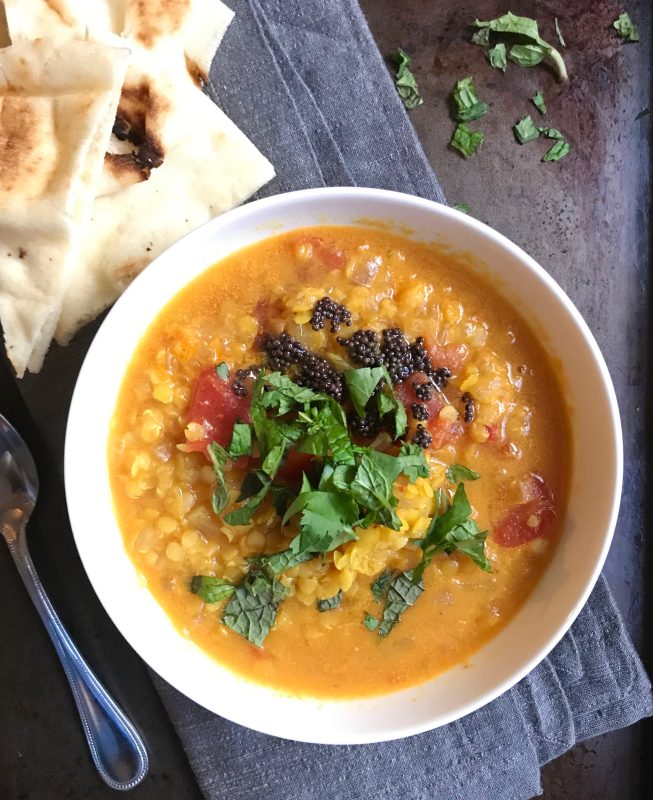
You can find pulses in a variety of forms including dried, canned, and in ready-to-eat microwavable pouches. I’m a big fan of canned beans and chickpeas. They’re convenient and inexpensive, and I use them often in recipes for chili, soups, salads, and quesadillas. I even have a recipe for Fudgy Black Bean Brownies on the blog. Dried lentils are another favorite and, depending on the type of lentil, they only take 15 to 30 minutes to cook in simmering liquid. In the recipe featured on this post, I use lentils in a salad, but I also enjoy them in thick, hearty soups like Indian Lentil and Tomato Dal, made with slow-simmered lentils, vegetables, and spices, and I’ve used them in tacos, replacing half the ground meat with cooked lentils.
Even though pulses are tiny, they pack a powerful nutritional punch, providing protein, fiber, folate, potassium, iron, magnesium, zinc, B vitamins, and antioxidants. Recognized by the USDA as both a protein and a vegetable, pulses can play an important role in a balanced diet. The 2020–2025 Dietary Guidelines for Americans recommend adults consume 1½ cups of pulses weekly (based on a 2,000 kcal diet), with potential revisions pending in future guidelines. Notably, Denmark and Mexico advocate a higher weekly pulse consumption (3 cups and 3 to 7 cups weekly, respectively), underscoring the versatility and nutritional significance of these culinary gems.
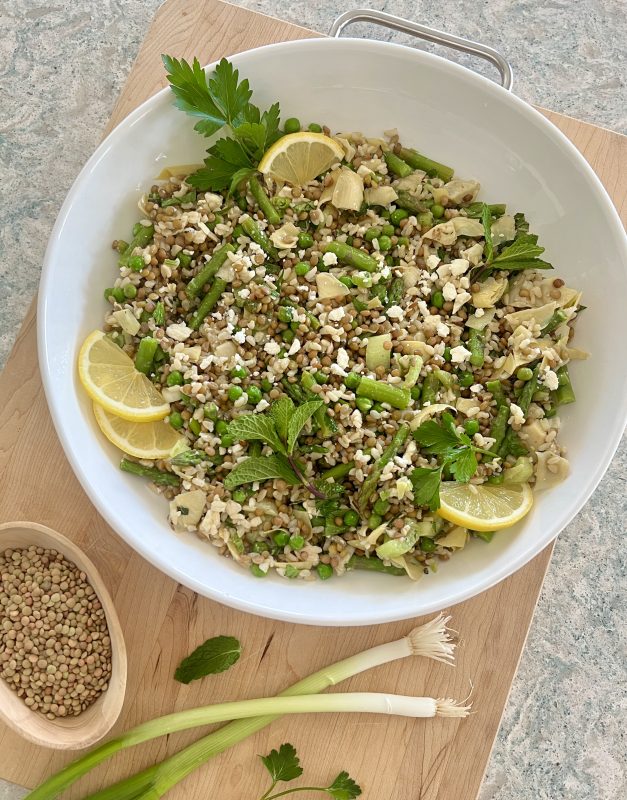
- Serves: 8
- Serving size: 1 generous cup
- Calories: 235
- Fat: 6g
- Saturated fat: 0.8g
- Carbohydrates: 37.5g
- Sodium: 450mg
- Fiber: 12g
- Protein: 11g
- 1 cup uncooked green or brown lentils, rinsed well and picked over for any debris
- 3 cups water
- 12 oz asparagus, woody ends removed and cut into 1-inch pieces
- 2 cups cooked brown or white rice, cooled
- 3 celery stalks, trimmed and cut into thin slices
- 1 cup fresh or frozen peas, cooked according to package directions
- 1 (12-oz) jar marinated artichoke hearts, drained and roughly chopped
- 2 green onions, trimmed and thinly sliced
- ½ cup fresh parsley, roughly chopped
- ½ cup fresh mint leaves, roughly chopped
- ½ cup crumbled feta cheese, optional
- ¼ to ⅓ cup extra virgin olive oil
- 2 T lemon juice
- 2 tsp Dijon mustard
- 1 small garlic clove, minced
- Drizzle honey or maple syrup, plus more to taste
- Kosher salt and ground black pepper, to taste
- In large saucepan, combine lentils and water. Bring to a boil, lower heat, and simmer, uncovered, until tender but not mushy, about 20 minutes, or according to package directions.
- When lentils are done, use a strainer or colander to drain. Rinse with cold water and drain well. Transfer to large bowl and set aside.
- While lentils cool, fill empty saucepan with 1 inch water. Place steamer basket inside pot. Arrange asparagus in steamer basket, bring water to a boil, cover, and steam until tender, 3 to 4 minutes. Carefully transfer asparagus to strainer, and rinse under cold water to cool. Drain well and use paper towel to blot away excess moisture.
- Place asparagus in bowl with lentils. Add rice, celery, peas, artichoke hearts, green onion, parsley, mint, and feta as desired. Mix well to combine.
- To make dressing, place oil, lemon juice, mustard, garlic, honey, and salt and pepper to taste in a jar with a tight-fitting lid. Shake until ingredients are well combined. Add more honey to taste.
- Drizzle dressing over salad and stir well to combine. Taste salad and adjust seasoning with salt and pepper.
Are you a fan of pulses? What’s your favorite pulse recipe?